FOSTERING WATER SECURITY AND CATCHMENT RESILIENCE IN UGANDA’S CATTLE CORRIDOR
The Cattle Corridor is central to the nation’s economic stability, food systems, and rural livelihoods as it is home to about 40% of Uganda’s human population and about 90% of the livestock population, covering approximately 43% of the country’s total land area. It supports millions of agro-pastoral households and contributes significantly to livestock production. Uganda’s Cattle Corridor is predominantly a semi-arid region that faces escalating climate change impacts, intensifying pressure on already fragile ecosystems and deepening community vulnerability.
On April 28, 2026, the Ministry of Water and Environment (MWE), in partnership with Conservation International and in collaboration with Africa Innovations Institute (AfrII), Victoria Basin Facility for Propulsion for Clean Development, and JC Holdings Limited, launched USD 7.59 million Global
Environment Facility (GEF) funded project: Fostering Water Security and Catchment Resilience in Uganda’s Cattle Corridor in Kampala, Uganda. The project aims to promote sustainable and climateresilient land and water management in Uganda’s Cattle Corridor. The launch convened a diverse group of stakeholders, including government officials from various ministries, departments and agencies, development partners, local government officials, civil society organizations, research institutions, the private sector and academia.
A Powerful Call for Integrated Action
In his keynote address, the Permanent Secretary of the Ministry of Water and Environment, Dr Alfred Okot Okidi, representing the Minister of State for Water, emphasised the need for solutions that address both environmental and socio-economic realities: “We cannot sustainably restore ecosystems without improving the lives of the people who depend on them.”
The representative of the Operational Focal Point to the GEF, Mr Denis Muggaga, emphasized the implementation of the environmental and social safeguards, which are fundamental to the sustainability of the project deliverables at the community level. He also highlighted how this project is a pilot under the emerging long-term strategic vision between the GEF and the GCF to strengthen complementarity and coherence of these funds in supporting transformational country-led climate action.
As an executing partner, the Africa Innovations Institute (AfrII) reaffirmed its commitment to translating strategy into tangible results: “Our role is to move beyond strategy and deliver real impact, connecting policy, communities and knowledge to ensure that climate resilience is sustained and scaled.”– Prof George William Otim-Nape.
What Success Looks Like
Over the next five years (2026–2031), the project will deliver targeted, measurable and scalable outcomes, including:
- Improved gender sensitive access to safe and clean water for consumption and agricultural production by local communities in the Cattle Corridor.
- Increased resilience of micro-catchment ecosystems to climate change due to sustainable use and management of water resources
- Strengthened and diversified livelihoods and income sources for vulnerable groups in the Cattle Corridor
- Strengthened Community-led organisations and Micro, Small and Medium enterprises (MSMEs) for learning, leveraging financing and the adoption of resilient and sustainable alternative livelihoods.
- Increased capacity of District and Local Governments to mainstream climate adaptation into District Plans.
Building Resilience Where It Matters Most
As climate risks intensify, the need for bold, coordinated and inclusive solutions has never been greater. This initiative demonstrates what is possible when strategic investment, government support, and strong partnerships come together to drive impact. It is not just about responding to the impacts of climate change, it is about building resilient communities, restoring ecosystems and securing sustainable futures.
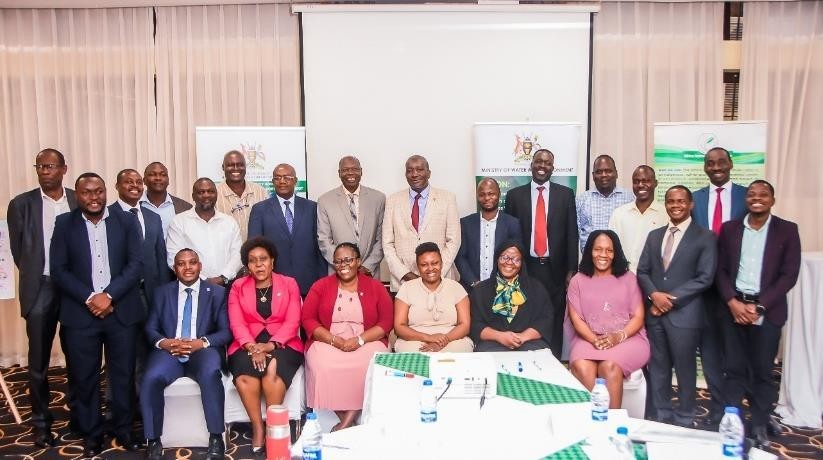
Photo with the Permanent Secretary, Ministry of Water and Environment (MWE) and representative from OFP, staff from MWE and MDAs, Conservation International, Africa Innovational, and other non-government organizations during the project launch on 28th April in Kampala, Uganda. Photo credit @AfrII
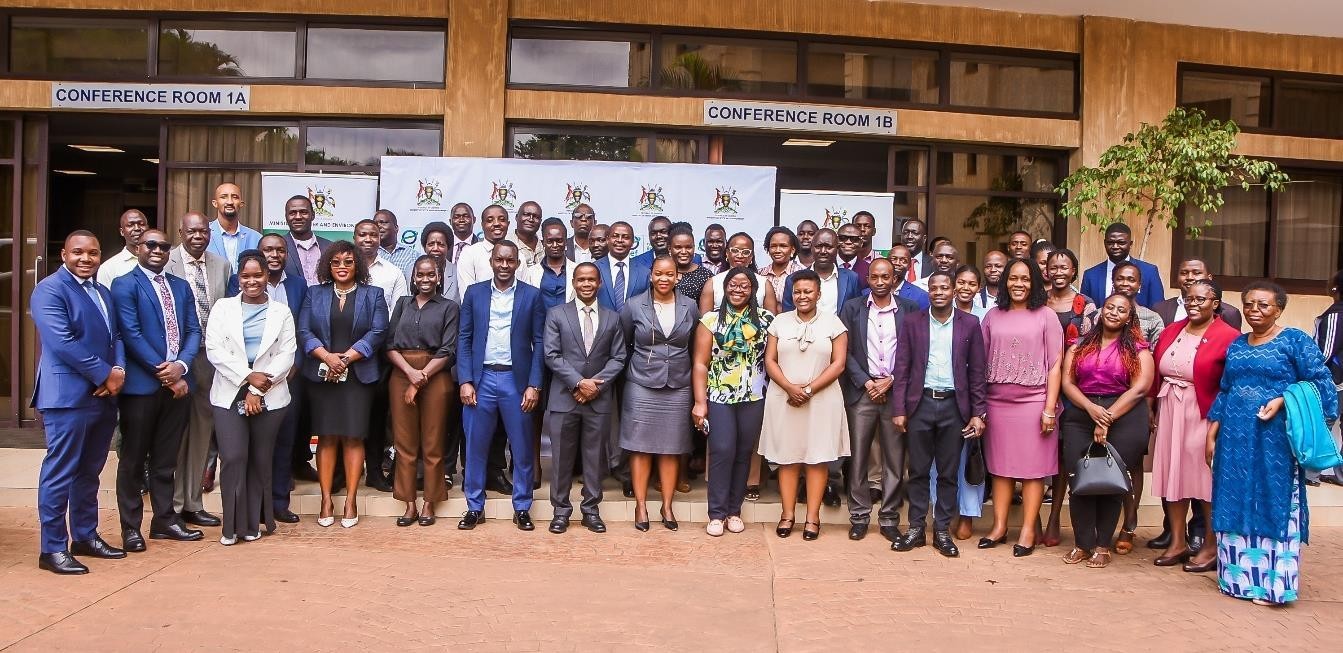
Group photo of the participants at the Launch of the Cattle Corridor Project on 28th April 2026 at Protea Hotel in Kampala Uganda. Photo credit: @AfriII