AfrII is Recognized And Praised As The Leading Innovations Hub In Africa

Dr. Felly holds an illustration of the plan she developed during the recirculate workshop, looking on is AfrII CEO Prof. Otim-Nape
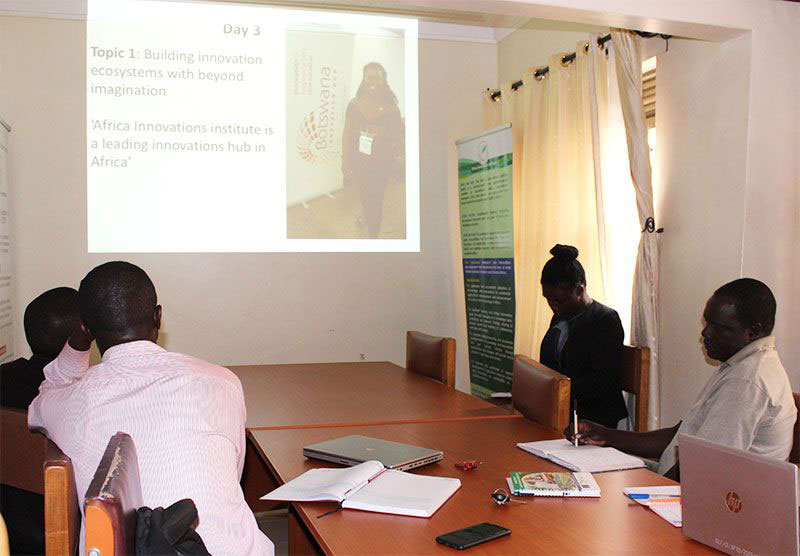
“It was amazing to hear AfrII referred to as the leading innovations hub in Africa because of the practical and problem -solving innovations we have introduced and rolled out to especially the Small Holder Farmers we work with to make impactful change in their lives. This glory is of course shared along with the partners and donors that believe in and share our vision to see not only a Uganda that is free of poverty, hunger, but also one with sustainable eco systems thus sustainable development.
This vision also extends to our neighboring countries and of course the rest of the world. But, to further our vision, we need more partnerships and collaborations to drive our goal to continue turning knowledge into a usable product through more innovations and technologies that must be tested, approved and accepted by those we work for and with, especially the Small Holder Farmers” said AfrII’s Head of Climate Change and Environment Sustainability Programme, Dr. Felly Tusiime during a brief to the AfrII team on her recent trip to the RECIRCULATE: Knowledge Exchange and Engagement workshop held in Gaborone, Botswana.
She also informed the team that the Knowledge Exchange workshop was quite beneficial because several areas for new collaborations were identified, and promising. Among this is collaboration on Renewable energy technologies for climate change mitigation, carbon financing and carbon trade for poverty alleviation, that will emerge from new partnerships to be explored with Bostwana International University of Science and Technology and Lancaster University.
The Recirculate practical and thought provoking KE workshop was organized by Lancaster University and about 50 delegates from across Africa attended.
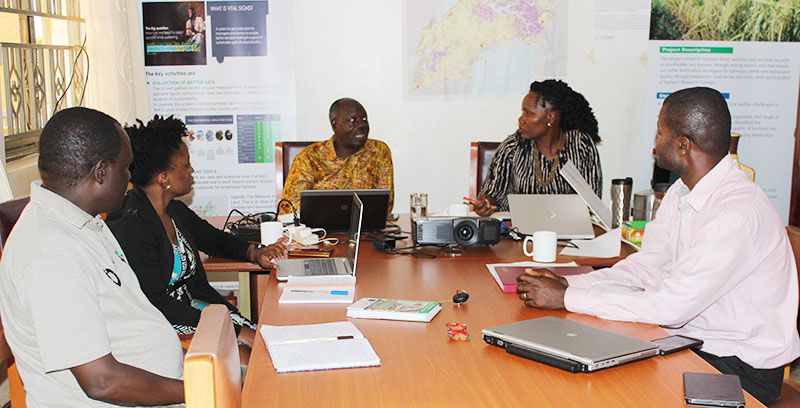
The team listens in and shares ideas on how AfrII can steer new innovations partnerships for sustainable growth and development.
AfrII Trains Lead Mothers, VHTs and Field Agents on Kitchen Gardens for Healthier Nutrition
AfrII nutritionists on the Livestock for Livelihoods (L4L) Project engage in training over 400 Lead Mothers (LMs), Village Health Teams (VHTs) and Field Agents in Kotido, Napak, Moroto and Nakapiripirit districts in the Karamoja sub region on how to set up a kitchen garden using locally available materials. The highly interactive and practical training involves setting up of a demonstration garden in one of the LMs home in order to promote consumption of vegetables at household level. The groups will also be supported with assorted seeds and garden equipment. At least 500 kitchen gardens are expected to be set up after the training.
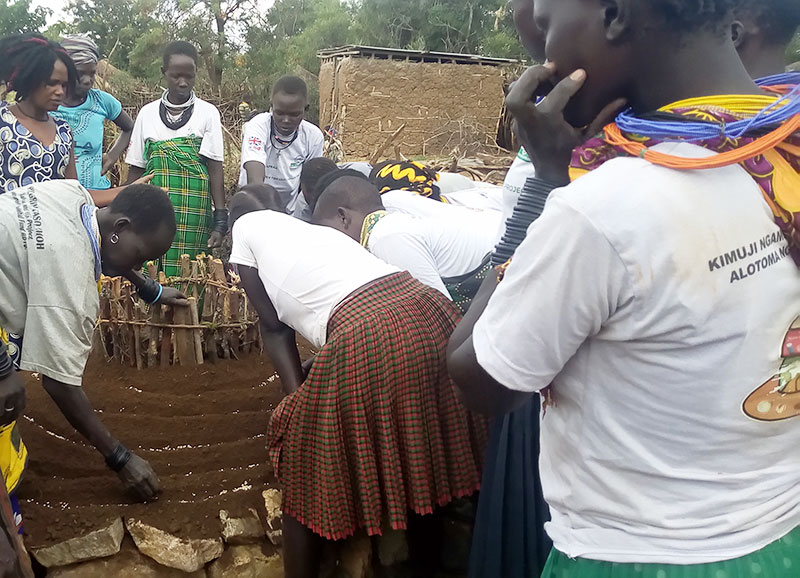
Lead mothers and VHTs constructing a Kitchen garden.
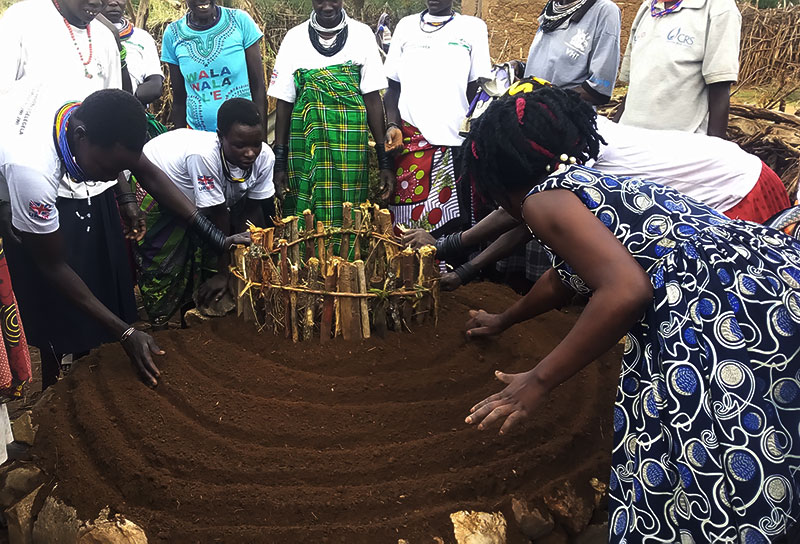
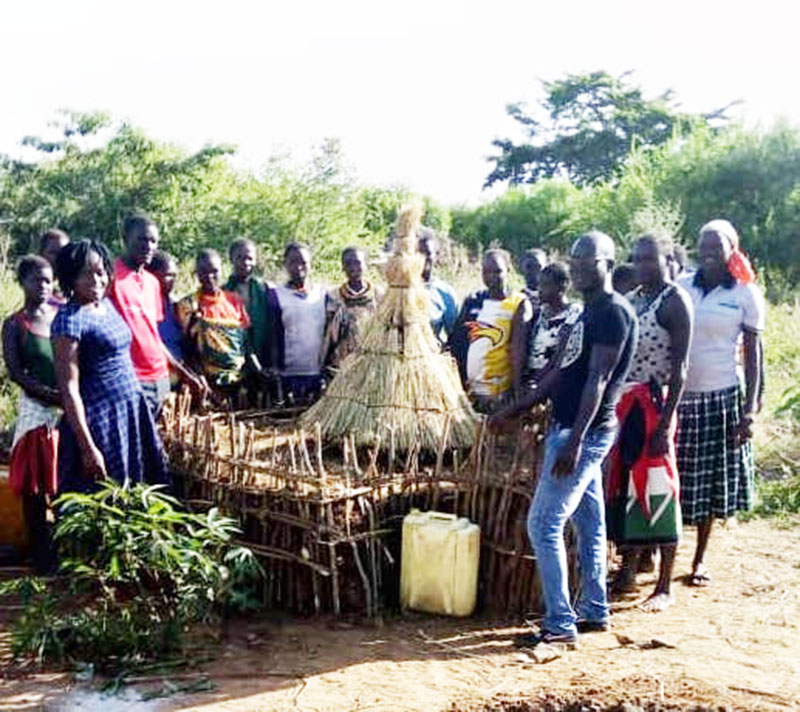
After completion of a Kitchen garden in Nakapiripirit district.
AfrII scientists and partners on the Fostering Sustainability and Resilience for Food Security in Karamoja sub region

AfrII scientists and partners on the Fostering Sustainability and Resilience for Food Security in Karamoja sub region (SURE-FS) project, collect biophysical data during the project baseline study. The team also collected socio economic data in 5 districts; Moroto, Nabilakut, Nakapiripirit, Kotido, and Kaabong. SURE-FS will work in the selected districts to demonstrate the potential for upscaling Sustainable Land Management (SLM) under different conditions, agro-ecological zones and livelihoods.
The Global Environment Facility (GEF) funded SURE-FS project will contribute to enhancing long-term environmental sustainability and resilience of food production systems in Karamoja to improve food security.

Selection and verification of 200 Nutrition Inner Circles (NICs) to improve nutrition outcomes at household level
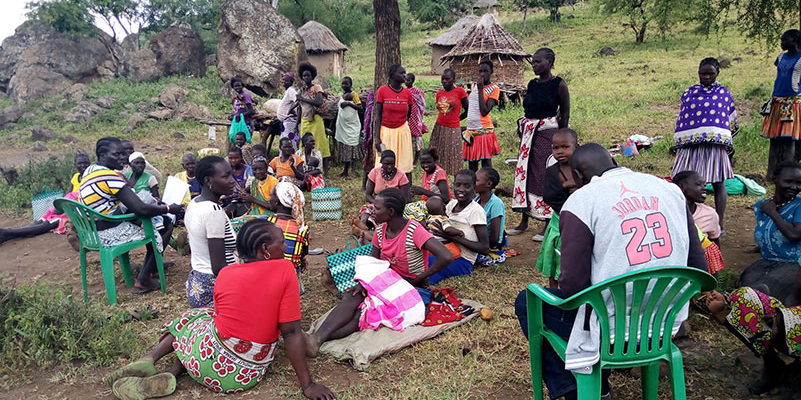
AfrII and Farm Africa’s Livestock for Livelihoods (L4L) project is engaged in field activities to establish 200 active Nutrition Inner Circles (NICs) comprising of between 10-15 Women of reproductive age with children between 0-59 months. The project targets these groups because they are at a higher risk of malnutrition and other infections.
The NICs are being selected from the existing farmer groups in the project areas of Moroto, Nakapiripirit, Napak and Kotido disctricts in the Karamoja region and will be used to contribute to improved nutrition outcomes at household level through promotion of dietary diversity, infant and young child feeding, Water, Sanitation and Hygiene (WASH), implementation of nutrition sensitive and specific interventions among others.
AfrII And Partners Commemorate World Breastfeeding Week
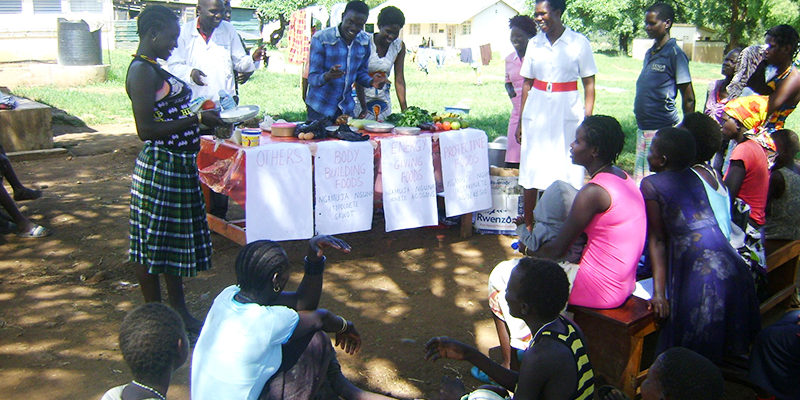
8/08/2019- Uganda, every year joins the rest of the world to commemorate the World Breastfeeding Week during the month of August. This year’s World Breastfeeding Week national celebrations were held on 8th August in Kiboga district under the theme “Empower Parent: Enable Breastfeeding”.
To honor the celebrations, the Africa Innovations Institute (AfrII) together with partners on the Livestock for Livelihoods (L4L) project organized food demonstrations at Moroto regional referral hospital in Karamoja. 50 women of reproductive age and at least 35 children of less that 5 years attended the demonstrations. The activity was highly participatory as the mothers were fully involved in the actual food preparations / cooking of several nutritious dishes including enriched porridge, and a number of balanced foods and “ekitobeero”. Some of the dishes prepared included millet flour + beef + peanut paste + amaranthus /boo, maize flour + silver fish +peanut paste, meat +cassava flour +peanut paste +beans, and fresh cassava tubers + cowpeas +eggs.
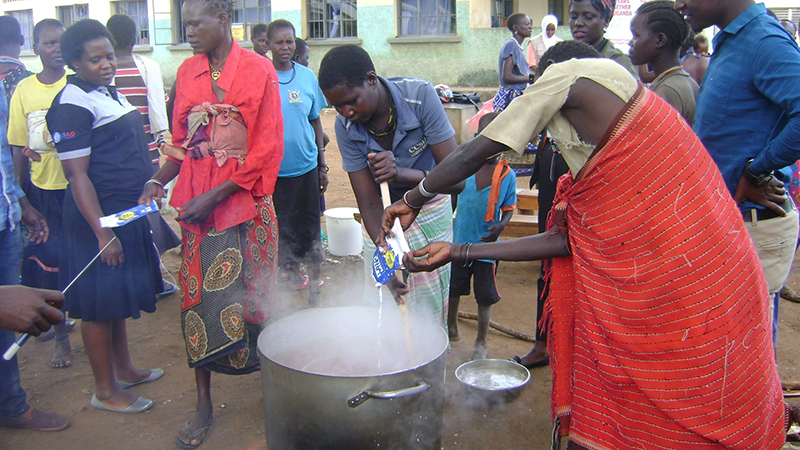
Mothers prepare enriched porridge during the food demonstrations at the Moroto regional referral hospital
The demonstrations enabled mothers to acquire the skills and confidence to select food mixtures and prepare improved food recipes using locally available and affordable foods. Also, Mothers and caretakers were able to rehabilitate malnourished children using locally prepared nutritious foods.
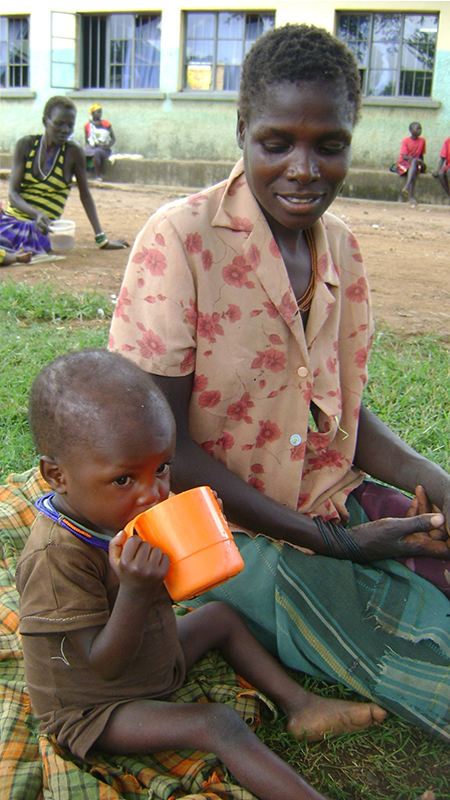
A child enjoys a cup of porridge.
Overall, the food demonstrations aimed to; promote consumption of diverse diets, support caretakers of children in OTC/ITC and women of reproductive age to prepare a balanced meal and also prepare a nutritious meal for rehabilitating the malnourished child.
Internationally, World Breastfeeding week is celebrated every year from 1 to 7 August to encourage breastfeeding and improve the health of babies around the world.
To achieve sustainable development, collaborations in Eco-Innovation Are Key

Participants in a group photo during the Eco-Innovations workshop held at Golden Tulip Hotel
8th July 2019– AfrII in conjunction with Lancaster University-UK successfully held a workshop on Internationalization of Research through Eco-Innovation at Golden Tulip Hotel in Kampala.
The workshop involved key expertise in the areas of research and eco-innovations from Government, local universities, private Sector and local NGOs to discuss the role of Eco-Innovation in delivering green economic growth and sustainable development.
Discussions during the workshop raised key issues including the need for national policy level considerations of sustainable industrialization models that ensure green economic growth. It was also realized that the role of universities and research organizations is crucial in this framework but there is a disconnect between research and the research community and this poses a big challenge.
To avert this, it was realized that local universities need to become internationalized through building strategic partnerships that support multi, inter and trans-disciplinary approaches to research. In addition, ensuring strategic partnerships that research organizations have with the users of research, in this case industry, is also significant to meeting sustainable development.
Eco-Innovation has the capacity to deliver the mechanisms needed for green growth and sustainable development. Those mechanisms will be essential to producing commercially successful products, services and technologies that reduce the impacts of human activities on the environment, achieve more efficient/ responsible uses of natural resources and enhance societal, economic, and technological resilience to environmental pressures. For this to be achieved, however, there is need for qualitative research, resource mobilization driven by government policies with focus on sustainable solution oriented research models to bridge gaps between the academia and industry.