23rd April 2026 |Silver Springs Hotel, Kampala, Uganda
For years, Uganda’s climate ambition 25% emissions cut by 2030 outpaced its ability to measure progress. A national data and capacity assessment revealed critical gaps: over 80% of institutions lacked gender-responsive data tools.
On 23 April 2026, Uganda took a decisive step from climate ambition to implementation through a hybrid launch event held at Silver Springs Hotel, Kampala, bringing together 150 in-person and 32 virtual participants. During the event, the Ministry of Water and Environment, in partnership with the Africa Innovations Institute (AfrII) and with support from the Global Environment Facility (GEF) through Conservation International (CI), officially launched the national Greenhouse Gas Inventory (GHGI) Training programme; Uganda’s practical response to the identified capacity and data management gaps affecting climate transparency and reporting.
Representing the Permanent Secretary of Ministry of Water and Environment (MWE), Mr Stuart Maniraguha described the 182 participants drawn from government institutions, academia, industry, civil society, and the private sector as “the guardians of Uganda’s national climate data,” emphasising that credible and verifiable data is essential for achieving the country’s 25% emissions reduction target under its Nationally Determined Contributions (NDCs)
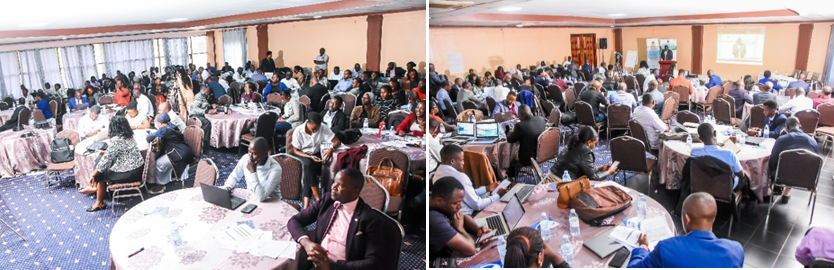
Participants during the official launch of the GHGI Training at Silver Springs Hotel
Key highlights from the launch:
- Official launch of the GHGI Training, targeting over 140 trainees with a 40% women’s participation goal.
- Annoucement of the GHG laboratory at AfrII, with gas chromatography to enable Tier 2 country‑specific emission factors.
- Introduction of the Atara Learning Management System for training and assessments, the introductory session scheduled for 29th April 2026.
The nine-module curriculum will be delivered by Future Energy Partners – Aether and is hands‑on, using real institutional data and IPCC software to cover the full inventory cycle; IPCC methodologies for Energy, Transport, Industry, Agriculture, Forestry and Waste, along with quality assurance, uncertainty analysis, institutional coordination and knowledge management. A supplementary module on Scope 1, 2 and 3 emissions will equip the private sector with corporate carbon accounting skills, clearly separated from the national inventory. All activities are aligned with Uganda’s NDC 3.0, directly supporting the country’s Biennial Transparency Reports.
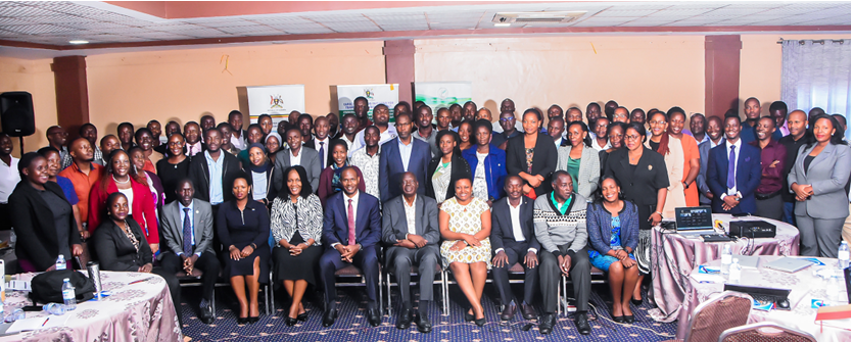
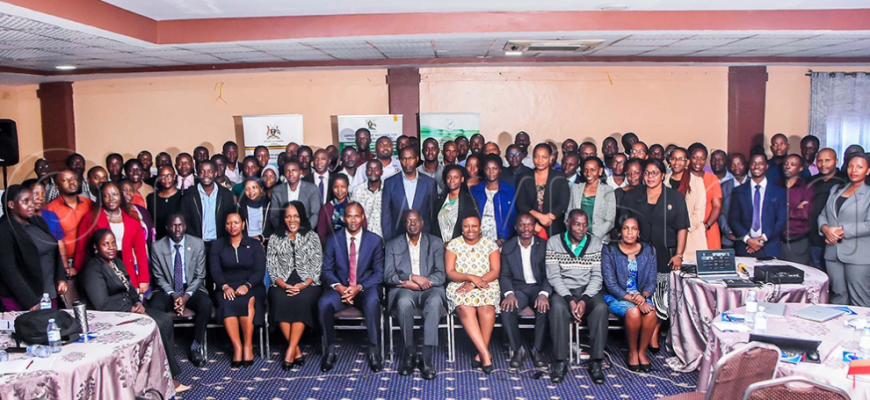
Group photo of the Participants from government, private sector, academia and civil society; who now carry the responsibility of building Uganda’s transparent, verifiable climate future (Photo credit-CBIT II Uganda)
Uganda has moved beyond the era of ambitious declarations. The country is now constructing the institutions, data systems and professional networks required to deliver verifiable climate action that is transparent, inclusive and uncompromisingly professional. In a global climate regime that increasingly values measurable results over rhetorical pledges, that is the most strategic investment a nation can make.
The CBIT II Project is implemented by the Ministry of Water and Environment’s Climate Change Department (MWE-CCD), in partnership with the Africa Innovations Institute (AfrII), with funding from the Global Environment Facility (GEF) through Conservation International (CI).
For more information contact: cbit.mwe@afrii.org